

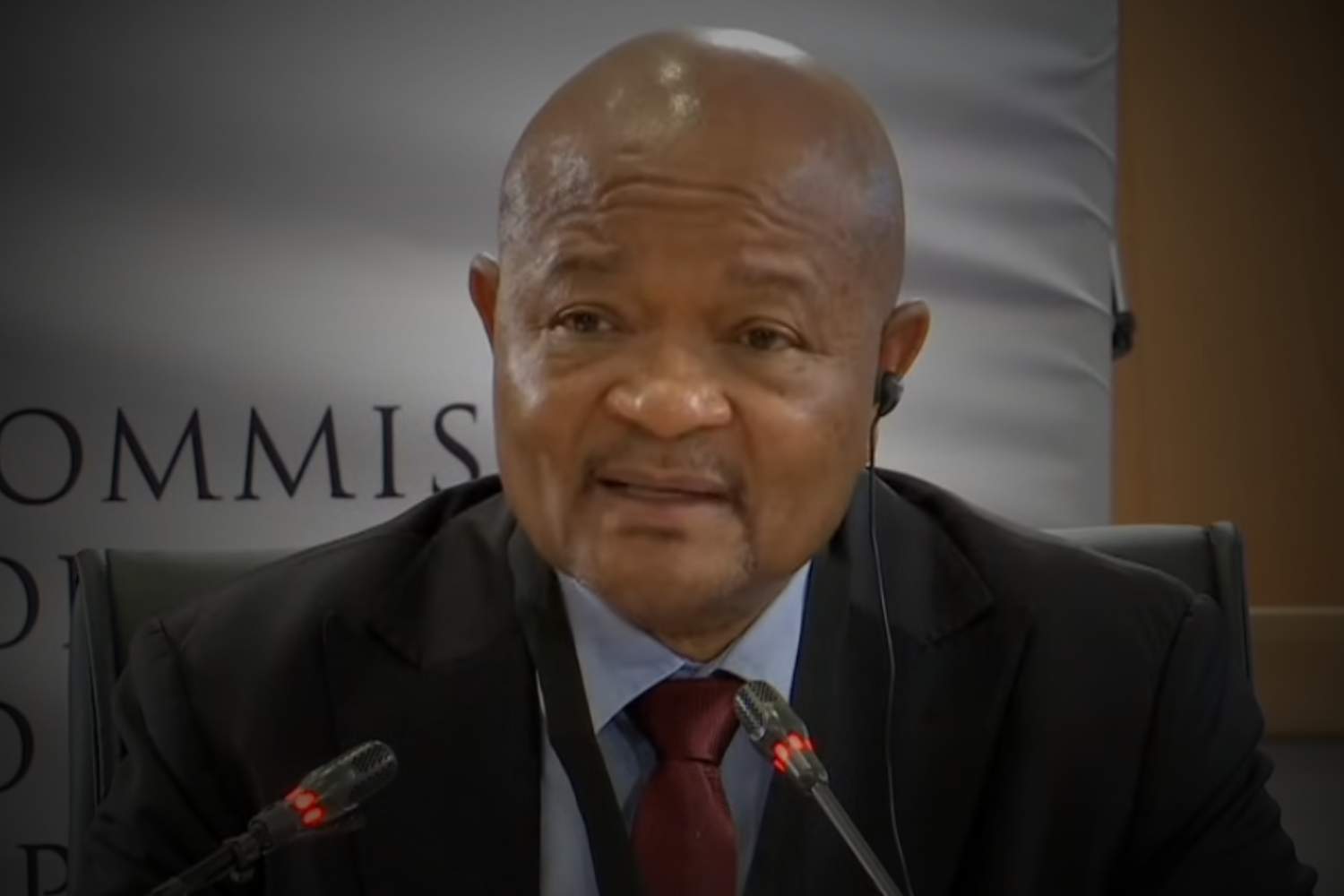
South Africa’s suspended police minister Senzo Mchunu has used his first appearance at the Madlanga Commission to defend his role in shutting down the Political Killings Task Team (PKTT), insisting the structure was never meant to be permanent and that plans to absorb it pre-dated his time in office.
At Tuesday’s sitting, Mchunu told the commission that a 2016 work-study report had already recommended that the PKTT be “disestablished” and its members folded into a revived murder and robbery unit.
He said the task team’s lifespan was initially set for six months in 2018 and “was never intended to be a permanent unit”.
Senzo Mchunu’s version of the task team decision
Mchunu testified that by the time he became police minister, the PKTT had effectively run beyond its original mandate and should have been integrated into existing SAPS structures.
He displayed an organogram based on a 2019 restructuring study which, he argued, showed that political killings investigations could sit within a strengthened murder and robbery environment rather than a stand-alone task team.
He rejected any suggestion that the PKTT was shut down by political diktat, saying he never intended to “disband” an operational unit but to rationalise overlapping structures.
Pushback from earlier evidence
Tuesday’s evidence unfolded against a backdrop of sharp criticism from previous witnesses.
Earlier in the commission, SAPS legal services head Major-General Petronella van Rooyen testified that Mchunu did not have the authority to disband the PKTT and that doing so would amount to “usurping the powers of the national commissioner”, Fannie Masemola.
KwaZulu-Natal police commissioner Lieutenant-General Nhlanhla Mkhwanazi has also alleged that Mchunu was “influenced” to scrap the team while acting as a proxy for controversial tenderpreneur Vusimuzi “Cat” Matlala, claims that triggered the commission’s establishment and led to Mchunu being placed on special leave.
Mchunu told the inquiry he had “never been accused of corruption, not once” in a political career stretching from KwaZulu-Natal provincial structures into the national Cabinet, and framed the PKTT decision as part of a broader reform agenda rather than capitulation to criminal interests.
What happens when Mchunu returns on Thursday
After a full afternoon on the stand, the Madlanga Commission adjourned Mchunu’s evidence to Thursday, 4 December, when he is expected to face further questions on the timeline of the PKTT decision, his powers as minister and his dealings with senior police commanders.
Commission spokesperson Jeremy Michaels has confirmed that this is the inquiry’s final week of public hearings for 2025, with an interim report due to President Cyril Ramaphosa by 17 December.
The panel aims to complete key evidence, including Mchunu’s testimony, before it pauses for the year-end break.
